
Bodies, Weather, and the Architecture of Care
Reading Bodies Under the Weather and Bespoke Healthcare Design felt to me like walking through two different kinds of weather, one heavy and suffocating, the other intimate and healing. Yet both speak about the same fragile material: the body as a site of experience, vulnerability, and meaning. As I read, I kept returning to a question that I think hides inside both chapters, though each approaches it differently: how does design—whether architectural, atmospheric, or object-based—participate in shaping our capacity to feel human?
Crippen’s text begins like a warning. It reminds me that even beauty can be cruel. I was struck by the idea that space can look generous but actually humiliate, how a bench or a wall can silently decide who belongs. When he described the DeVos Center and how the homeless avoid it without being told to, I felt that familiar tension between form and power, between aesthetic order and exclusion. I paused to ask myself: when does design stop being a creative gesture and start becoming an act of control? Maybe, as Crippen suggests, the answer lies in the “political affordances” already built into things, the ways we make access selectively permeable.
This made me think about somaesthetics and what Shusterman writes about cultivating bodily awareness. But Crippen moves it into a darker place: what if our somaesthetic awareness is not cultivated but wounded? What if the body learns to feel itself as unwanted through space itself? I have seen this in my own experience as an immigrant; when a space or atmosphere does not reject you directly, but everything in it whispers that you are not designed for it. The color, the materials, the silence, the arrangement of things, or even visual design, create what he calls “hostility.” I think that is what he means by being “under the weather”: not only physically exhausted but existentially excluded.
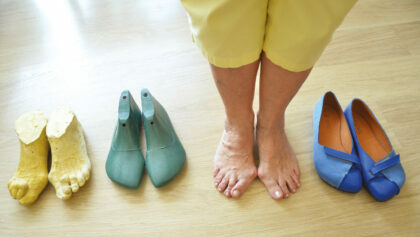
Then, in Bespoke Healthcare Design, Shahar and Ventura seem to answer from the other side of that wound. They, too, work with the same material—the body in the world—but instead of exposing hostility, they rebuild intimacy. Their projects, like Jolie, Maya, or Dea, transform pain and vulnerability into occasions for beauty. What I love here is how they refuse the hierarchy between function and aesthetics. The bag, the shoe, the heating belt, these are not “solutions,” they are gestures of recognition. I can feel the ethics of care in those projects: to design with, not for; to listen to the body as collaborator. This is what I always discuss in my classes as the empathy phase in design thinking, but with deeper attention to the human body as our only and evolving asset, a form of Soma Thinking.
Reading these two texts together makes me realize that design operates between two weathers: exclusion and care, hostility and hospitality. Crippen’s city is cold and selectively permeable; Shahar and Ventura’s world is soft and bespoke. Yet both show how aesthetics becomes the medium through which the body is acknowledged or denied.
As I was reading, I found myself thinking about my own projects and installations. They emerged from that same threshold where the environment becomes an emotional climate. I have always been drawn to the question of how space or typography can carry empathy, or its absence. Crippen’s analysis of architectural hostility makes me look again at my installations: are they creating spaces of encounter or merely framing others within aesthetic control? And Shahar’s notion of “form follows deformation” resonates deeply with my own practice of embracing imperfection as cultural identity.
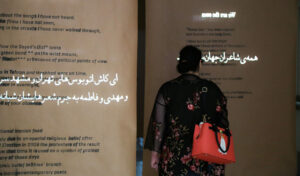
Homeland (وطن), Mehrdad Sedaghat, 2019
The more I think about it, the more I realize that these chapters are not just about design; they are about the politics of sensation. They ask how sensation itself is distributed, how comfort or discomfort becomes a language of power. For Crippen, discomfort is a form of exclusion; for Shahar and Ventura, comfort becomes a form of liberation. Somewhere between the two lies somaesthetics, not as a luxury of awareness, but as an ethical practice: to feel the weather of others, to sense how design translates into dignity.
My question, then, continues to evolve: if design can make people feel under the weather, can it also become a way to change the weather, to redesign climates of existence? I think that is where my work wants to go. I am learning that to design is to choreograph atmosphere, to shift how bodies inhabit the world. Whether through typography, architecture, or the soft edge of a wearable object, every form carries a climate. Reading these chapters helps me see that aesthetics is not the surface of design but its temperature.
And maybe that is the shared message: we are all bodies under some kind of weather, but design has the potential to decide whether that weather isolates or connects us.
Diana Torres
Rassa id neque aliquam vestibulum morbi blandit in fermentum et sollicitudin ac orci phasellus egestas tellus velit ut tortor pretium viverra suspendisse potenti nullam ac tortor eu turpis egestas pretium.
David Jonson
Massa id neque aliquam vestibulum morbi blandit in fermentum et sollicitudin ac orci phasellus egestas tellus velit ut tortor pretium viverra suspend isset.